
Beyond the Brick Wall
- EWB (Singapore)
- Jun 16
- 4 min read
In April 2025, a small team from Engineers Without Borders (Singapore) packed their bags and headed for Kathmandu. The mission was two-fold: a critical infrastructure recce at the Peace Child Ministry (PCM) facility in Bungamati, and an Immersive Study Tour alongside our counterparts from EWB Nepal and EWB Switzerland.
Between navigating dense structural assessments, getting to know the locals, and sweating through some seriously intense manual labor, the trip proved to be a massive eye-opener.
Here is what we saw, what we learned, and what we couldn't stop talking about on the flight home.
Immersive Study Tour

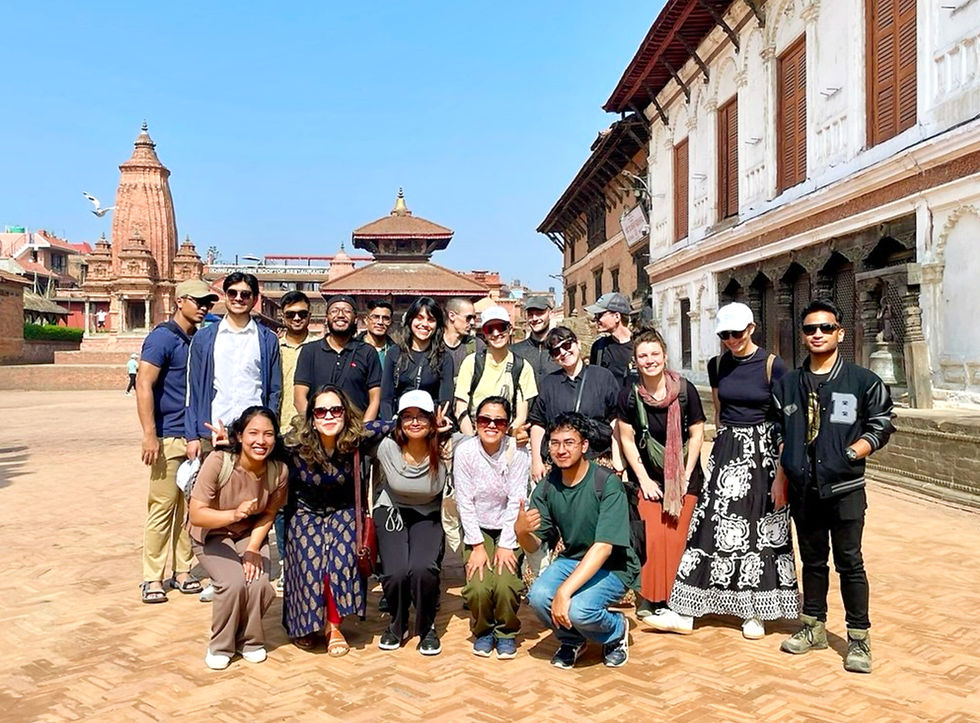
A major highlight of the trip was participating in the Immersive Study Tour (IST) alongside EWB Nepal and EWB Switzerland.
We spent time learning about the Revolution Project — a brilliant local initiative planting urban ‘pocket forests’ to bring native greenery and wildlife back to concrete areas. The concept is beautifully simple: take tiny, dense patches of land, turn them into self-sustaining ecosystems, and teach city dwellers why urban green spaces matter.
The team immediately saw potential for a future EWB (SG) collaboration here. However, the project hits a unique roadblock as historical deforestation has been so severe that there aren’t enough baseline samples of native biodiversity left to mirror easily. EWB Nepal is eager to link arms with international chapters to bring in the resources needed to scale it up.


Of course, it wasn't all heavy technical brainstorming. We explored historic sites like Bhaktapur and Boudhanath, where some of us tried our hand at local pottery (with varying degrees of success).
We also discovered local King Curd, a rich, thick yogurt that absolutely stole the show and is officially a mandatory cultural activity for future volunteer cohorts.
Conversations with EWB Nepal also forced us to confront a sobering statistic: the country loses roughly 3,000 to 5,000 young talents every single day to emigration. To counter this massive brain drain, EWB Nepal is focusing heavily on empowering the next generation through their Junior Chapter and iLab programs, trying to build opportunities worth staying for.
Confronting Hard Realities: The Factory and Slum Visits
To truly understand a place, you have to step outside the usual tourist bubble. We visited local carpet factories, brick kilns, and nearby slums—an experience that stripped away any romanticised notions of the region and showed us the raw daily struggles of vulnerable communities.

The brick factory had a tense, heavily monitored atmosphere with security cameras tracking the workers' every move. The slums were a different kind of heavy. The sheer level of destitution, paired with the overpowering smell rising from the adjacent river, left our team member Thaqyf with literal goosebumps long after we walked away.
It was a profound reality check for us. The extreme poverty in these areas stems from deeply rooted political and structural issues far beyond the scope of a quick engineering fix.
Realistically, a handful of volunteers can't repair these systemic fractures. But these raw, uncomfortable visits are necessary, especially for our volunteers to understand firsthand the difficulties of the region they are trying to serve.
Building the Brick Wall (and Battling the Elements)

Back in April 2023, EWB (SG) had set up a rainwater harvesting system and run water sanitation trials at the PCM facility to help fight unreliable government water supplies.
On this trip, our hands-on engineering work got a lot grittier. Severe rainwater runoff from an adjacent slope was pooling tightly against the external dining wall. The water was slowly seeping into the girls’ dormitories, causing structural damage and a lot of damp anxiety.
Working side-by-side with Amrit, our trusted local partner, we executed a multi-layered fix: clearing out mounds of heavy mud, sealing foundation gaps with caulk and rubber sealant, and physically laying bricks to build a permanent defensive flood break.

Realities on the Ground

Word of the day: ‘Heatstroke’
The sun in Nepal does not play around in April. Mixing cement and laying bricks in the direct, intense heat was incredibly gruelling.
Note to future teams: either schedule heavy construction before mid-April (when temperatures stay below a blissful 20°C) or strictly enforce a rule of 1.5 hours of work followed by a mandatory 30-minute cooling break. No exceptions.
Supply Chain Improv:
You can't just run to a local hardware store for specialised gear. We quickly realised local shops had zero stock of basic items like ladders or paint trays. To make matters tougher, the damp ground made it a nightmare for the caulk to adhere properly.
Note to future teams: pack and bring specialised tools, measuring gear, and paint trays directly from Singapore.
What's Next?
After an intense week of manual labor and emotional processing, we managed a brief window for some much-needed R&R in Kathmandu. We explored a local farmer’s market, caught up with the Swiss and Nepalese teams over dinner, and even squeezed in a short salsa dancing night before catching our flight back to Singapore.


The flood wall was a great milestone, but the work at PCM is far from finished. Before heading home, we took initial layout measurements of the girls’ dormitory roof to prepare for an upcoming roof replacement project. We also noted that the facility's rainwater harvesting system desperately needs a retrofit to handle seasonal downpours without overflowing or clogging up the gutters.
Every blister, logistical headache, and emotional insight from this trip is already being funnelled back into our planning for the next trip. We're making sure the next project in Nepal will be safer, tighter, and even more impactful.


Comments